By Anne Ramos, CSP, ASP, COHC
Director of EHS at Leedo Cabinets
When you select new cabinets for your home or business, you’re looking at the grain of the wood, the durability of the finish and the precision of the joinery.
As someone who has lived in the world of industrial hygiene and manufacturing safety since 1997, I see something else behind the beautiful cabinet facade. I see the people who made it and the commitment required to keep them safe.
I joined the cabinet manufacturing industry in 2023, coming from a background in large-scale manufacturing and consulting. I am a certified safety professional (CSP), and I currently oversee safety for two Leedo Cabinet plants in southeast Texas with approximately 500 employees. One thing I’ve witnessed is that Leedo employees are all in and highly engaged. The Leedo focus, as driven by our CEO, David Mullis, is that we begin with placing people/employee safety first in every manufacturing process step, at the beginning of every shift, throughout the day, every time, all-of-the-time. The best cabinet manufacturers know that true quality starts with workplace safety compliance.
Moving Beyond OSHA Environmental Compliance
As a member of the KCMA safety subcommittee, I work alongside safety professionals from across the country — including our competitors. It might seem strange for competing cabinet manufacturers to sit at the same table. However, we start every meeting with a shared pact: We aren’t talking about production or clients. We are talking about doing the right thing for our employees.
For a specifier or a homeowner, knowing that your new cabinets were made in a KCMA-certified facility means knowing that the manufacturer is proactive. Here is how we bridge the gap between complex regulations and the shop floor by moving beyond basic compliance to focus on the total well-being of our teams.

Workplace Hazard Identification: Navigating Hidden Risks
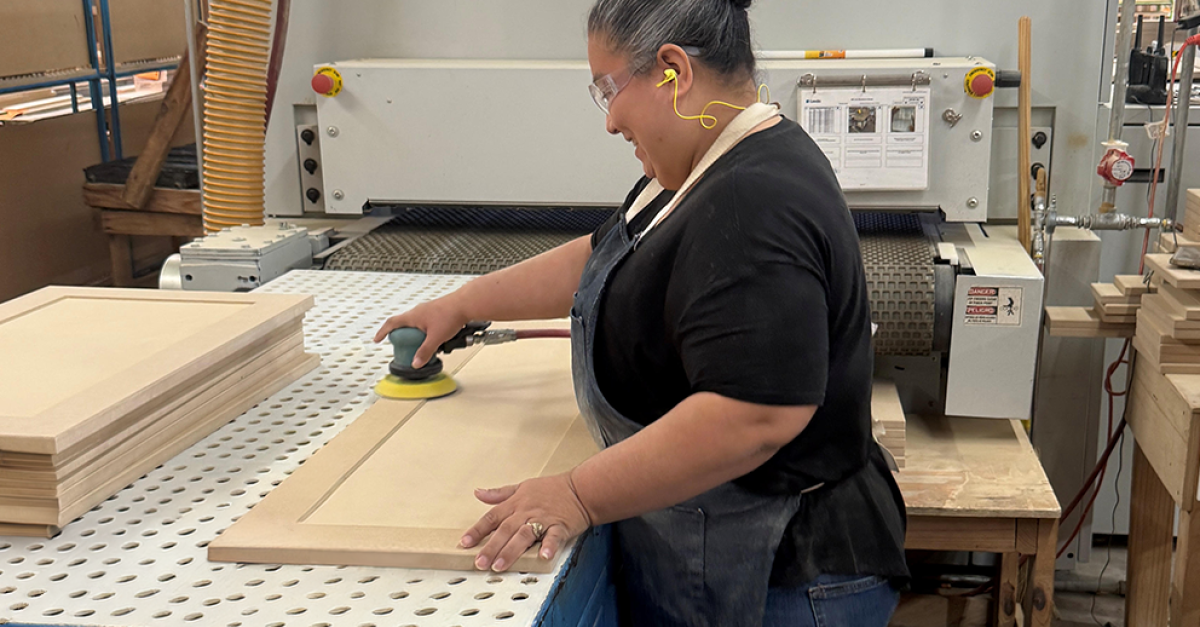
Most people think of safety in terms of glasses, hard hats and earplugs, but the cabinet manufacturing industry has unique challenges that require expert workplace hazard identification.
- Chemical exposure: We go beyond wearing respirators. We conduct air sampling to understand how chemicals in paints and even the formaldehyde in plywood glues might affect workers when blades generate heat.
- The hierarchy of controls: We don’t hand out earplugs and call it a day. We follow a hierarchy of controls, which means we first attempt to engineer the hazard out. For example, using sound-dampening blankets or mufflers on loud machinery before relying solely on personal protective equipment (PPE).
- Ergonomics: Whether an employee is under 5 feet tall or over 6 feet, our workstations need to fit them. We are constantly tweaking workstations to reduce repetitive motion and over-reaching, ensuring that our craftsmen can have long, healthy careers. For example, we build our own specialized equipment, like custom carts, to provide the tools that fit the specific needs of our skilled cabinetmakers.
When our production team visits other cabinet manufacturing plants, we bring back safety enhancements and implement them here. The plant tours have been valuable to not only our efficiency, but our ongoing safety efforts.
One of the most impactful changes a manufacturer can make is moving from a top-down safety approach to one of front-line ownership. If the safety team is the first to find a hazard on the manufacturing floor, it means the employee, the lead, the supervisor and the manager have all missed an opportunity to intervene. Real safety excellence happens when those closest to the situation take the lead in identifying and correcting risks before they reach the audit stage.
Standing up for Our Workers
KCMA advocacy plays a critical role in the Occupational Safety and Health Administration (OSHA) rulemaking process and acts as a powerful voice for the cabinet manufacturing industry. A recent example of this was when OSHA proposed new heat illness prevention policies. When KCMA members like our company shared data and existing proactive measures, cabinet manufacturing was removed from a high-risk list because we were already going above and beyond what was being proposed.
Our company is located in rural Texas, where we operate in older facilities. In this environment, high temperatures aren’t just a weather report; they are a significant operational hazard that requires constant management.
As part of our updated new hire orientation, we integrated acclimatization to the heat. New employees are gradually introduced to the high-temperature environment on the shop floor rather than being expected to handle full shifts in the Texas heat on day 1.
We continue to follow the strict heat guidelines and recommendations because it remains the right thing for our employees.
Why This Matters to You
When you buy or specify cabinets from KCMA members, you are supporting a domestic industry that invests in its people. We don’t just run 30-minute training sessions to check a box. We are building a culture where safety is the foundation of every cabinet door and drawer box.
As a mother who regularly faces traffic jams to be there for my family, I know how important it is for every worker to get home safely to their family at the end of their shift. They are the real resource behind your cabinets.
Anne Ramos, CSP, ASP, CAOHC, is the environmental health and safety (EHS) lead for Leedo Cabinetry in southeast Texas. She oversees safety for approximately 500 employees across two facilities. Anne brings nearly three decades of expertise to the woodworking industry.