By Chuck Arnold, Vice President Standards and Certification
I talk to specifiers every day who are caught in a difficult balancing act. You’re under constant pressure to keep project costs down, yet you know that saving a few dollars on uncertified cabinets today often leads to expensive warranty callbacks and a damaged professional reputation tomorrow.
The challenge is that you can’t personally oversee the manufacturing of every cabinet. You need a way to verify preassembled kitchen cabinet performance without spending hours auditing a factory’s private data. That’s where the ANSI/KCMA A161.1 standard comes in. It isn’t just a logo; it’s a rigorous filter that addresses your daily risks head-on.
Testing Kitchen Cabinet Performance
When a manufacturer sends us their cabinets for testing, we don’t just check them; we try to break them. To earn the ANSI/KCMA A161.1 Quality Certification Seal, kitchen cabinets must endure a battery of 14 tests that simulate a lifetime of use (and abuse). These tests include structural, door operation, drawer cycles and finish. Here are some examples of the rigorous testing process.

Weight Loading
We subject the wall cabinets to a 600-pound load (stress) test. If a joint opens or the mounting system fails, it doesn’t pass. This ensures that the cabinetry holds up under the weight of heavy stoneware, canned goods and appliances.
Mechanical Endurance
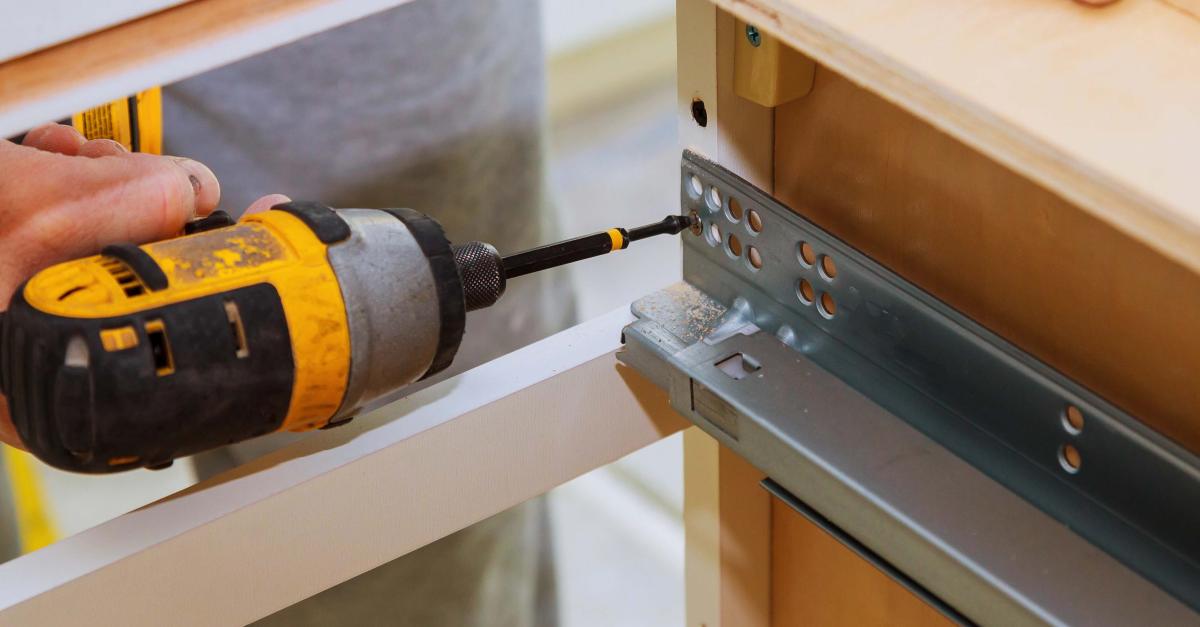
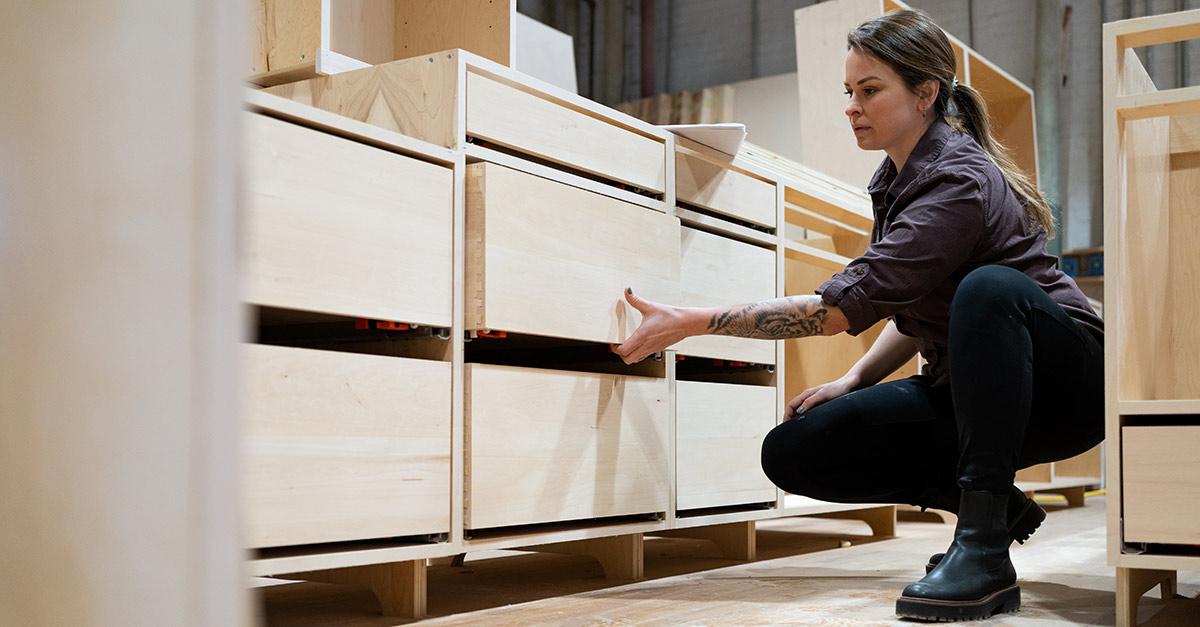
We open and close doors and drawers 25,000 times while under load to validate long-term performance. This process reveals the quality of the drawer glides and hinges — components that frequently fail in uncertified products after just one year of use.
Chemical and Heat Resistance
We expose the cabinet finish to common household liquids, such as vinegar, grape juice, coffee and alcohol, for 24 hours. Durable cabinets must also survive high-humidity “hotbox” environments without blistering or discoloration.
Do Manufacturers Ever Fail the Test?
Yes. Cabinet manufacturers sometimes fail the quality certification test. In fact, 40% to 50% of manufacturers fail on their first attempt to qualify for the quality certification program. That is exactly why the KCMA seal is your best risk mitigation tool. Those initial failures have helped manufacturers revise, refine or change what they do in their manufacturing process to eliminate the problems.
We commonly see cabinets challenged by the base front joint loading test, which simulates the extreme forces applied when cabinets are screwed together against a bowed wall during installation. We also see seamed doors fail when moisture penetrates the adhesive and causes the wood to swell. By specifying certified kitchen cabinets, you can be assured that these engineering flaws have been resolved before the product arrives at the new construction or remodeling work site.
When you specify a certified cabinet, you know the product has complied with an industry-accepted standard for how a cabinet should perform. That gives the customer confidence that their cabinets are going to be trouble-free during their lifetime of use.
Is the Cost of Certification Passed on to the Project?
A common misconception is that cabinet certification adds a massive premium to the price tag. In reality, the primary drivers of cabinet cost are material quality and market segment, not the certification status.
The initial cabinet testing fees are remarkably low — often under $1,000 for a set of cabinets. This allows manufacturers at every price point to participate.
In other words, the quality certification program includes everyone from stock/builder-grade manufacturers (using particle board and simple construction) to high-end custom shops (using premium plywood and custom-made finishes). This means you can choose a certified kitchen cabinet regardless of whether the project is a budget-conscious “fix and flip” or a luxury residential build.
It’s also worth noting that frameless cabinets are also eligible for the quality certification seal. The frameless — also known as European-style — cabinets lack a structural face frame, meaning the box itself must be exceptionally robust.
- Frameless cabinets typically show a higher initial failure rate on the base front joint loading test.
- Frameless cabinets often use seamed doors, such as slab doors with edge banding or thermofoil. If the machining isn’t watertight, moisture can penetrate the seam, causing the substrate to swell and the finish to bubble.
| Feature | KCMA Certified | Uncertified |
|---|---|---|
| Structural Integrity | 600-pound wall load tested | Unknown/ untested |
| Drawer Cycles | 25,000 cycles while loaded | High failure risk |
| Finish Durability | Resistant to stains, heat and humidity | Prone to staining or peeling |
| Complaint Resolution | Third-party mediation policy | Manufacturer's word alone |
Your Safety Net: Post-Occupancy Support
The value of KCMA extends beyond the manufacturer’s loading dock. We provide a formal consumer complaint resolution policy. If a homeowner has a valid performance issue that the standard should have prevented, they can file a complaint with us. We facilitate a resolution with the manufacturer to ensure that the product meets the promise of the seal, keeping you out of the middle of messy post-installation disputes.
The Bottom Line: Specify With Confidence
In certain markets, quality certification isn’t just a “nice to have” — it’s a requirement. Many large-scale-production builders and multi-family housing developers require KCMA-certified cabinetry. Choosing certified products means that your project meets these common contractual and industrial prerequisites.
Whether you are working on a high-volume multi-family project or a high-end custom build, cabinet performance is your best defense against project risk.
Don’t guess on durability. Protect your ROI and always look for the KCMA quality seal. Learn more about the quality certification seal.
Chuck Arnold is the vice president of standards and certification at the Kitchen Cabinet Manufacturers Association (KCMA), based in Reston, Virginia. With more than 25 years of experience in the cabinet industry, he is a leading expert on performance and construction standards for kitchen and bath cabinetry.