
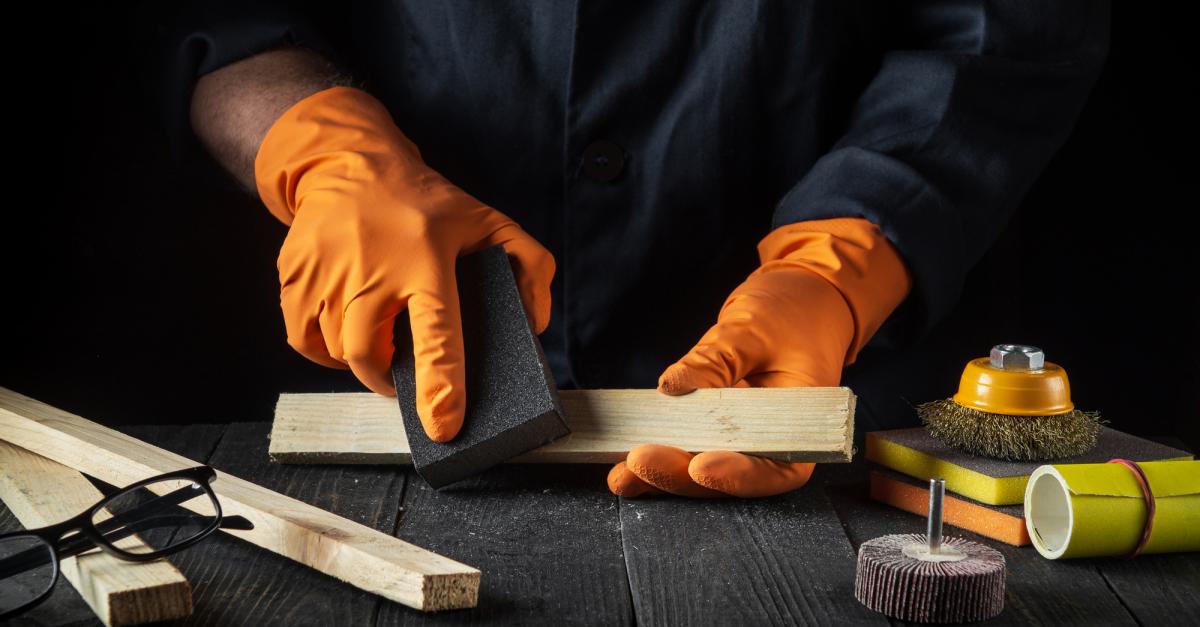
Key takeaways from our latest hand safety discussion, covering splinter prevention, glove selection, pinch and crush hazards, and building a workplace culture where protection is everyone's priority.
Summarized from the Hand Safety Discussion
71% of hand injuries preventable with proper PPE, per OSHA
23% of all workplace injuries involve the hands or fingers
#1 most common injury type in our workplace
Hand injuries remain the single most common injury in our workplace — a fact underscored during our most recent safety discussion. The good news: the vast majority of these incidents are preventable. What follows is a summary of the strategies, equipment considerations, and cultural commitments that came out of that conversation.
The Splinter Problem
Several recent incidents required surgical intervention to remove splinters — most occurring during manual rustic hickory staining on hang lines, where workers are in prolonged contact with rough wood surfaces. This prompted a frank conversation about whether our current PPE is truly up to the task.
We've relied on A4-rated gloves, which offer medium cut protection (withstanding up to 2,199 grams of cutting load). While adequate for many applications, our specific conditions appear to demand more. A5-rated gloves — which step up to 2,999 grams of resistance — offer meaningfully improved protection against splintering wood. The tradeoff is real: thicker materials reduce breathability and increase heat and sweat buildup over a full shift. This is a comfort-versus-protection balancing act that deserves further attention.
PPE must balance effectiveness, dexterity, and cost — but the cost of an injury will always exceed the cost of better gloves.
Spray application, which would reduce direct wood contact, isn't always feasible when a rustic hand-applied finish is required. That means we need to go upstream: ensuring that cutting, routing, and sanding tools are sharp and appropriate dramatically reduces the amount of tearing and splintering at the source. Dull tools create ragged surfaces — sharp tools leave cleaner ones.
Choosing the Right Glove
Not all gloves are created equal, and the wrong choice can create a false sense of security. A few alternatives were raised in our discussion worth evaluating:
Nitrile gloves are familiar to many as needle-puncture protection in medical settings and offer a thin, dexterous barrier that may be layered under cut-resistant gloves. HexArmor gloves with nitrile overlays combine structural cut resistance with the grip and chemical protection of nitrile — a potentially strong combination for our finishing environment.
One consistent finding from industry research: full-finger gloves outperform fingerless options across nearly every hazard type. The tips of fingers are among the most frequently injured areas, and leaving them exposed defeats much of the purpose of wearing hand protection at all.
For sanding tasks specifically, vibration-reducing gloves deserve consideration. Prolonged vibration exposure can contribute to hand-arm vibration syndrome (HAVS), a condition that compounds over time and affects circulation and nerve function.
It's also worth noting: no glove is impenetrable. Staples and nails can and do puncture even high-rated gloves. PPE is one layer of a multi-layered approach — not the whole solution.
Pinch Points and Crush Injuries
Pinch and crush injuries represent a separate but equally important risk category. These often stem from poor hand placement habits, handling too many items at once, or relying on hands where a tool or fixture could be used instead.
Training must consistently reinforce safe material handling techniques — specifically, workers should understand the geometry of the equipment around them and keep hands away from any point where two surfaces could close on each other. When equipment is involved, Lockout/Tagout (LOTO) procedures are non-negotiable. Machines that can be de-energized must be before anyone reaches in to adjust, clear, or inspect them.
Proper machine guarding is the engineering side of this equation — guards that are removed for convenience and not replaced are a leading contributor to severe hand injuries industry-wide.
Beyond PPE: Building a Protection-First Culture
One useful reframe raised in the discussion: approach safety with a “free-thinking” mindset. Evaluate every possible solution first, then assess cost — rather than letting cost be the first filter. This matters because the cost of a serious hand injury (medical treatment, lost productivity, workers' compensation, and human suffering) almost always dwarfs the cost of better equipment or process changes.
A few cultural commitments that came out of the discussion:
Replace worn PPE regularly. Gloves degrade with use. A worn-out A5 glove may perform closer to an A2 in practice. Workers should feel entirely comfortable requesting replacements — and that comfort level is something leadership has to actively cultivate, not just assume.
Enforce policies consistently. PPE policies only work if they're followed every time. Reinforce expectations during onboarding, toolbox talks, and regular walkthroughs.
Eliminate the hazard where possible. The hierarchy of controls puts engineering solutions ahead of PPE for good reason. Wherever we can remove hands from a high-risk operation — through fixtures, jigs, automated assists, or redesigned workflows — we should pursue it.
The goal isn't just compliance — it's creating an environment where every worker goes home with all ten fingers. That starts with taking every near-miss seriously and encouraging open conversation about risk.
Resources for Further Reading
OSHA Standard 1910.138 — Hand Protection
The federal regulation governing employer requirements for hand PPE selection and use.
OSHA: Hand & Power Tool Hazards and Solutions
Practical guidance on recognizing and controlling tool-related hand hazards in manufacturing environments.
Oregon OSHA: Hand Protection Resource Hub
Comprehensive collection including hazard assessment guides, PPE selection tools, and bilingual resources.
ANSI/ISEA 105-2024: Understanding Cut Resistance Ratings
Breaks down glove cut levels A1–A9, including what A4 vs. A5 means in practical terms.
SafetyCulture: Hand Safety in the Workplace
Accessible overview of hazard types, injury statistics, and best practices for hand protection programs.
HSI: Hand Safety & Injury Prevention
Covers engineering controls, administrative controls, and PPE — the three-pillar approach to prevention.
TRADESAFE: Lockout/Tagout & Hand Safety Best Practices
Detailed guidance on LOTO procedures, machine guarding, and toolbox talk topics for hand safety.
EMC Insurance: Hand Injury Prevention at Work
Research-backed resource including Harvard School of Public Health findings on glove effectiveness.
THIS DOCUMENT IS PROVIDED BY KITCHEN CABINET MANUFACTURERS ASSOCIATION (“KCMA”) FOR INFORMATIONAL PURPOSES ONLY. ANY INACCURACY OR OMISSION IS NOT THE RESPONSIBILITY OF KCMA. DETERMINATION OF WHETHER AND/OR HOW TO USE ALL OR ANY PORTION OF THIS DOCUMENT IS TO BE MADE IN YOUR SOLE AND ABSOLUTE DISCRETION. PRIOR TO USING THIS DOCUMENT OR ITS CONTENTS, YOU SHOULD REVIEW IT WITH YOUR OWN LEGAL COUNSEL. NO PART OF THIS DOCUMENT CONSTITUTES LEGAL ADVICE. USE OF THIS DOCUMENT IS VOLUNTARY. KCMA DOES NOT MAKE ANY REPRESENTATIONS OR WARRANTIES WITH RESPECT TO THIS DOCUMENT OR ITS CONTENTS. KCMA HEREBY DISCLAIMS ALL WARRANTIES OF ANY NATURE, EXPRESS, IMPLIED OR OTHERWISE, OR ARISING FROM TRADE OR CUSTOM, INCLUDING, WITHOUT LIMITATION, ANY IMPLIED WARRANTIES OF MERCHANTABILITY, NONINFRINGEMENT, QUALITY, TITLE, FITNESS FOR A PARTICULAR PURPOSE, COMPLETENESS OR ACCURACY. TO THE FULLEST EXTENT PERMITTED BY APPLICABLE LAWS, KCMA SHALL NOT BE LIABLE FOR ANY LOSSES, EXPENSES OR DAMAGES OF ANY NATURE, INCLUDING, WITHOUT LIMITATION, SPECIAL, INCIDENTAL, PUNITIVE, DIRECT, INDIRECT OR CONSEQUENTIAL DAMAGES OR LOST INCOME OR PROFITS, RESULTING FROM OR ARISING OUT OF A COMPANY’S OR INDIVIDUAL’S USE OF THIS DOCUMENT, WHETHER ARISING IN TORT, CONTRACT, STATUTE, OR OTHERWISE, EVEN IF ADVISED OF THE POSSIBILITY OF SUCH DAMAGES.